
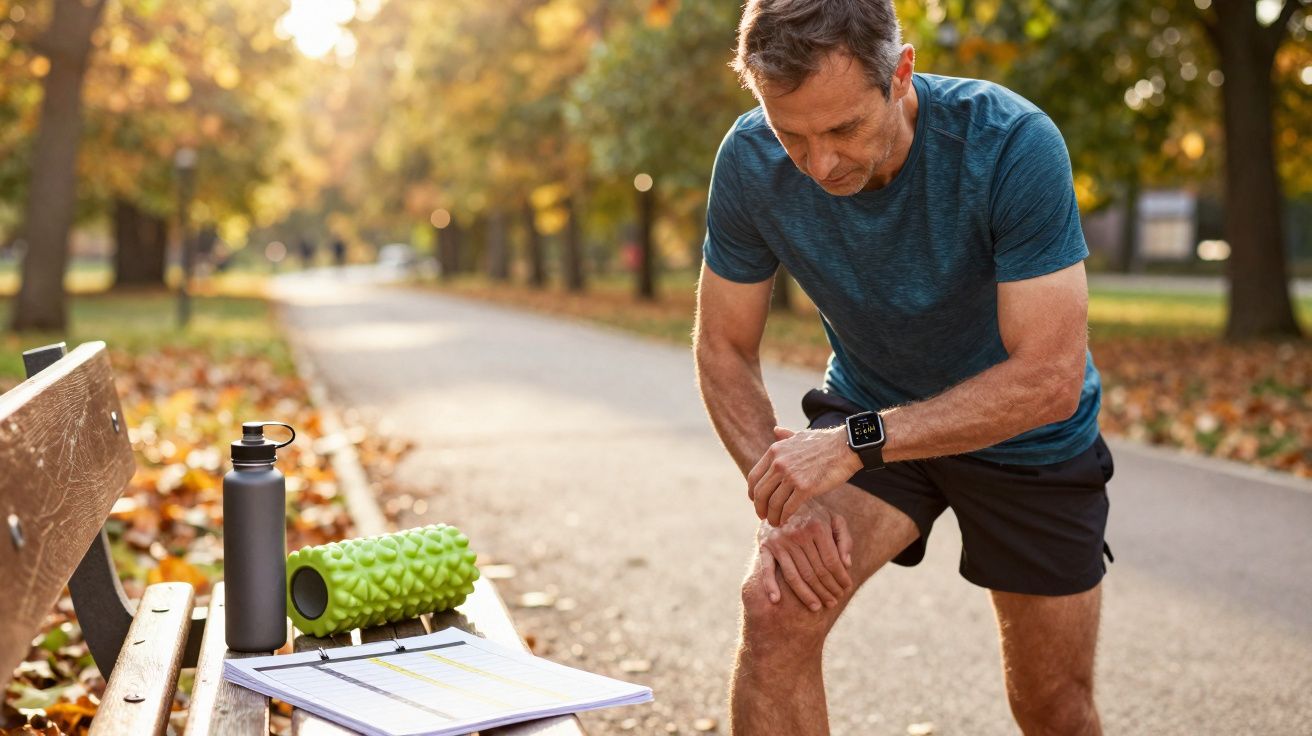
Plenty of recreational runners launch into the first mild month of the year full of motivation, only to be brought up short after a handful of sessions by sharp knee pain. Yet a straightforward rule-almost dull on paper-can cut that frustration dramatically. What matters most isn’t the latest running shoe, but how intelligently you build your training load.
Why your knees rebel so quickly when you start again
Spring motivation meets a winter body
Mentally you’re ready to chase personal bests, but physically you’re often still in “winter mode”. After months of sitting more than moving, muscles and tendons are sluggish and your joints are no longer used to impact. If you jump straight into long runs or fast paces, your knees can object very quickly.
A common pattern is a stabbing pain on the outside of the knee that shows up mainly while running and eases again when walking. This is often the so‑called runner’s knee, where overloaded structures along the outside of the thigh and knee become irritated. It rarely has anything to do with age or “bad joints”-and almost always with doing too much, too soon.
“Knee pain after starting running again is usually not fate - it’s a signal that the return was too hard and too fast.”
What controlled progression changes
If you deliberately keep the restart gentle, you give tendons, ligaments and joints time to adapt. With moderate, consistent loading, tissue strengthens. Minor micro‑damage has time to recover before more is added. Gradually, that builds a resilient system that can handle longer and faster runs without flaring up.
The extra benefit is simple: when you can run without pain, you stay consistent, rack up more training weeks and become noticeably fitter than someone who keeps losing time to injury breaks. A little patience now pays off later.
The 10 per cent rule: simple, mathematical, extremely effective
How the rule works
The core idea is this: increase your weekly running volume by no more than around ten per cent compared with the previous week. This refers to your total weekly distance or total running time-not just one session.
Examples:
- Week 1: 20 minutes total running time
- Week 2: maximum 22 minutes
- Week 3: about 24–25 minutes
- Week 4: roughly 27 minutes
It sounds modest-and that’s precisely why it protects you. The structures around the knee get more work, but only in a dose they can adapt to, rather than becoming inflamed.
“The art of starting running isn’t pushing to the limit, but deliberately staying below it.”
A possible starter plan for the first month
If you’re returning after a longer break, a simple four‑week approach can work well. The basis is an easy pace where you can still speak in full sentences.
| Week | Volume | Note |
|---|---|---|
| 1 | 20 minutes easy jog or run‑walk mix | Check how your body feels, no pressure, keep your heart rate low |
| 2 | 22 minutes | Same intensity, just slightly more time |
| 3 | 24–25 minutes | If needed, do two very short runs instead of one longer one |
| 4 | approx. 27 minutes | Lock in the habit, keep the pace deliberately relaxed |
If you finish feeling almost under‑challenged, you’re doing it exactly right. The principle is: stop the session while you still have plenty left, rather than staggering home completely spent.
Practical knee tips for everyday running
When life gets in the way
Work stress, too little sleep, a cold-any of these reduces what your body can tolerate. In those weeks, even ten per cent can be too much. The answer is honesty: if you feel heavy, tired or stiff, keep your weekly volume the same as the previous week.
- Same volume, even slower pace
- Or: replace one run with gentle mobility work
- Or: add a bike ride or brisk walks
That way you keep the routine without provoking your knees further. Training doesn’t only mean “doing more”; it means dosing it wisely.
The three pillars for pain‑free runs
If you want to run steadily through spring for months, three basic rules help:
- Consistency instead of crash‑and‑burn efforts: Two or three short sessions per week do more than an occasional run that’s far too long.
- Keep your ego in check: Don’t measure yourself against your past self or other runners. Your body sets today’s pace.
- Take recovery seriously: Sleep, rest days and genuinely easy days belong in the plan.
“Those who treat recovery as a fixed part of training usually run longer, further and, above all, with less pain.”
What protects your knees even more
Technique, surfaces and shoes
Alongside the 10 per cent rule, a few practical details also matter:
- Shorten your stride: Many runners over‑stride and land heavily in front of their body. Slightly shorter steps with a higher cadence can noticeably reduce knee stress.
- Choose softer ground: Early on, opt for woodland paths or park trails rather than only hard tarmac.
- Check your running shoes: Replace worn‑down soles, but don’t expect miracles from high‑tech models. Fit and comfort matter more than marketing promises.
If you’re unsure, get advice in a running shop. A straightforward, honest assessment is worth more than the most expensive pair on the wall.
A little strength work, a big effect
Strong muscles around the knee and hip reduce joint strain with every step. Even a few minutes of strengthening each week can make a noticeable difference. Typical exercises include:
- light bodyweight squats
- lunges forwards and backwards
- side‑plank variations for hips and core
If you move slowly and with good form, there’s no need to chase a burning sensation. Consistency beats intensity.
Why small steps lead to big runs
It’s tempting to jump straight back to old achievements: the same route as last year, the same pace, the same ambitious targets. But your body responds mainly to what you’ve done in recent weeks-not the personal best from back then.
The 10 per cent rule works like a handrail on a steep staircase. You can still climb steadily, but you’re far less likely to slip each time. That turns a spring restart from a stress test into a calm build phase-one you can use as the foundation for summer.
If you rein in your ambition just a little, you end up with exactly what most people want: relaxed runs, strong knees and the freedom to head out spontaneously without thinking about the next appointment with an orthopaedic specialist.

Comments
No comments yet. Be the first to comment!
Leave a Comment