
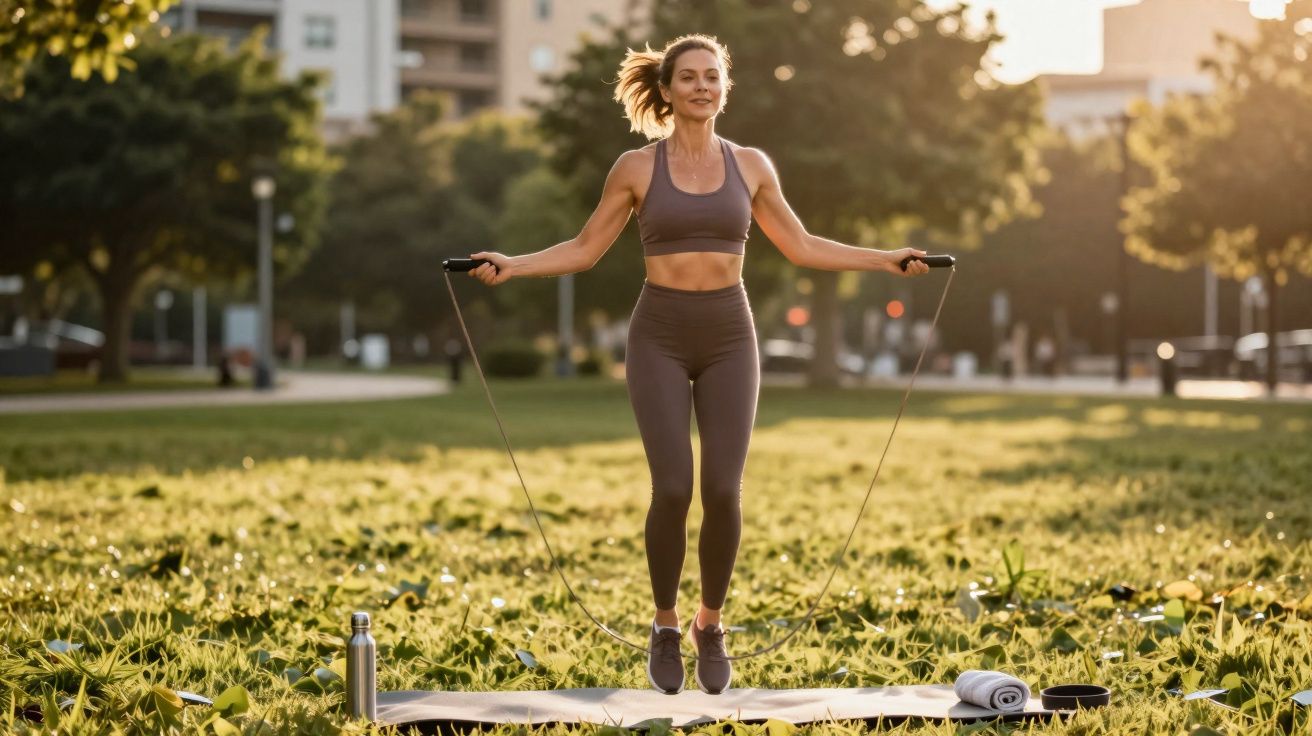
If you’re over 50 and you catch your reflection, you may notice more than just fine lines. For many people, the upper arms also start to look softer, with skin that feels less firm. The encouraging part is that this is an area where the right blend of strength work and fat loss can still make a clear difference - often faster than you’d expect.
Why arms can start to look “saggy” after 50
Over time, the body naturally loses muscle mass as muscle protein gradually declines. At the same time, many people see their overall body-fat percentage rise. The upper arms tend to show these shifts quickly: the tissue feels less taut, and the skin may wobble slightly when you wave.
Hormonal changes around the menopause can add to this, making it easier to store fat around the tummy and upper arms. Without purposeful activity to counter it, the change is noticeable in everyday life: carrying bags, lifting shopping, and even spending long stretches at a desk can feel more tiring.
"The key to firm arms is combining muscle gain with fat loss - and you can train both in one short, intense session."
That’s where a workout many people associate with childhood and the playground - but rarely pick up as adults - comes in: classic skipping.
Skipping: the underestimated arm and core booster
At first glance, skipping looks like a legs-only exercise. In reality, your whole upper body works hard throughout. Your shoulders rotate, your elbows stay close to your sides, and your forearms drive the handles - which strongly challenges:
- Biceps (front of the upper arm)
- Triceps (back of the upper arm - the “wave zone”)
- Shoulder muscles (deltoids)
- Upper back
- Abdominal and core muscles
Because the movement repeats continuously, each turn of the rope asks the muscles to tense, stabilise, and release again. The result is a demanding muscular endurance session that not only strengthens but can also help shape the arms.
On top of that, skipping burns a lot of calories. It’s one of the most efficient cardio exercises there is: your heart rate rises quickly, your body shifts into fat-burning mode, and that helps reduce overall body fat - including in the arms.
The 15-minute plan for firmer arms after 50
US fitness trainer Amanda Kloots has relied on skipping for years and says she has seen visible changes, particularly in her arms and stomach. Her recommendation is a compact 15-minute routine, split into three short blocks.
Block 1: Warm-up and first effort
This opening section gets your circulation going and switches on the upper arms and shoulders.
- 60 seconds of skipping at a comfortable pace
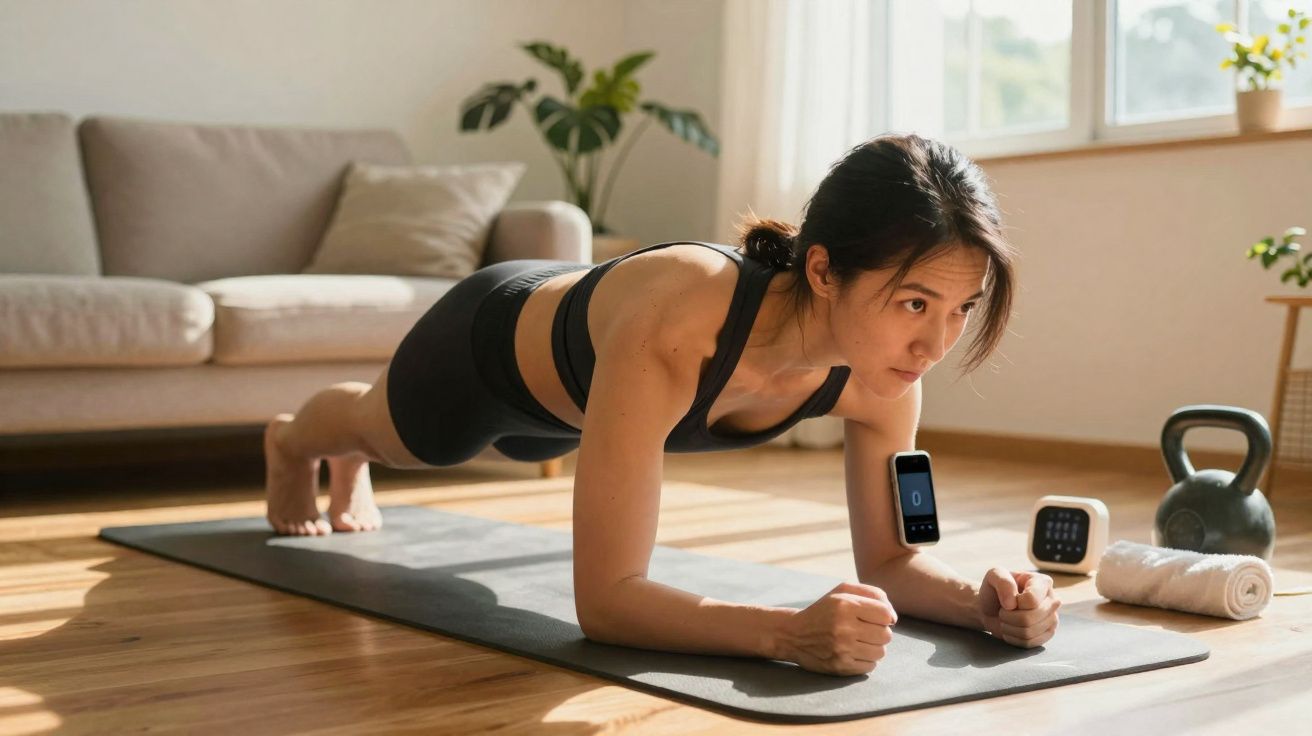
- 30 repetitions of “plank jacks” (forearm plank or press-up position, jump feet out and in)
- 60 seconds of skipping
- 30 “plank jacks”
- 60 seconds of skipping
If you’re new to this, you can halve the plank-jack reps or swap them for a static forearm plank hold.
Block 2: Variety to increase the stimulus
Now you add variations that demand more from your legs, core, and arm action.
- 8 regular skips
- 8 skips with feet opening and closing (like mini star jumps) - 3 rounds
- 8 regular skips
- 8 skips with high knees - 3 rounds
- 8 skips with high knees
- 8 “jump lunges” (jumping lunges, 4 per leg) - 3 rounds
This sequence also recruits the glutes, thighs, and core more strongly, which increases the training effect across the whole body.
Block 3: Short sprints for the afterburn effect
To finish, you do a brief but intense interval:
- 15 seconds of skipping at your base pace
- 15 seconds of skipping as fast as possible
Repeat this cycle as many times as needed until you reach 15 minutes. The priority is quality: it’s better to keep the technique clean and go slightly slower than to rush and make lots of mistakes.
How beginners over 50 can start skipping safely
At 20, many people can simply start and get away with it. After 50, preparation matters far more. Following a few basics can noticeably protect joints and ligaments.
The right preparation before your first jumps
- Warm up for 5–10 minutes: march on the spot, light knee lifts, shoulder circles, loosen the ankles.
- Adjust the rope: stand on the middle of the rope and pull the handles up - they should reach roughly to your armpits.
- Wear cushioned trainers: running shoes or fitness trainers with a supportive sole reduce stress on knees and the back.
- Choose a forgiving surface: a mat, wooden floor, or sports flooring is better than bare concrete.
One crucial point: keep the jump low. A few centimetres is enough for the rope to pass under your feet. Jumping too high only adds unnecessary strain to your knees and back.
Building up training if you’re out of practice
If your last PE lesson was a long time ago, a gradual approach helps. A sensible progression is:
- Start with 1–2 minutes of skipping in intervals, for example 20 seconds skipping, 40 seconds rest
- Build up to 5 minutes total time across several sessions
- Then work steadily towards 10–15 minutes
"After a few weeks of training, the body often responds faster than you think - arms look more defined, posture is more upright, and everyday life feels easier."
If you have chronic knee, hip, or back issues, speak to your GP or a physiotherapist before you begin. In many cases, a reduced volume or a softer surface is enough to make the workout tolerable.
Common mistakes that reduce the effect on your arms
Many people focus on the legs when skipping and miss a lot of the upper-arm potential. Three issues in particular often blunt the results:
| Mistake | Consequence | Better approach |
|---|---|---|
| Big arm movements driven from the shoulder | Tight shoulders, less targeted arm tension | Keep elbows close to the body; generate the movement from the wrists and forearms |
| Over-arched lower back and looking down | Back discomfort, poor body tension | Stand tall, lightly brace the abs, look ahead |
| Landing heavily on the heels | High load on knees and spine | Land softly on the balls of the feet; keep knees slightly bent |
How often should you skip to see results?
If your goal is to tackle soft upper arms, you don’t need daily marathon workouts. Practical options include:
- 3 skipping sessions per week of 10–15 minutes
- On the other days, gentle movement: walking, cycling, taking the stairs
- 1–2 extra triceps exercises, for example chair-edge dips or light dumbbell kickbacks
Many people notice the first changes after around four to six weeks: T-shirts feel looser around the arms, definition starts to return, and everyday movements feel easier.
When skipping isn’t a good idea
As effective as skipping can be, it doesn’t suit every situation. Extra caution is needed, for example, with:
- recent operations affecting the musculoskeletal system
- severe osteoarthritis in the knee or hip
- major back problems with nerve pain
- pronounced osteoporosis with previous fractures
In these cases, more joint-friendly alternatives such as water-based training, rowing on an ergometer, or upper-body workouts with resistance bands may be a better fit. The goal remains the same: targeted muscle building in the arms and back.
Why skipping is about more than just “toning arms”
If you commit to skipping daily or several times a week, the benefits go beyond appearance. Coordination improves, the cardiovascular system becomes more resilient, and bone density may stay stable for longer because bones interpret small impacts as a training signal.
Another advantage that’s easy to overlook: many people describe a mental lift. The steady rhythm can feel like a quick reset for the mind - stress drops away and focus returns, which can be particularly welcome in working life or busy family years after 50.
Once you’ve cleared the early hurdles, it’s easy to keep it playful: side-to-side jumps, single-leg jumps, short sprints, or pairing skipping with simple strength moves adds variety, challenges the arms in new ways, and keeps motivation high. That’s how a childhood game becomes a serious fitness tool for the second half of life.
Comments
No comments yet. Be the first to comment!
Leave a Comment