
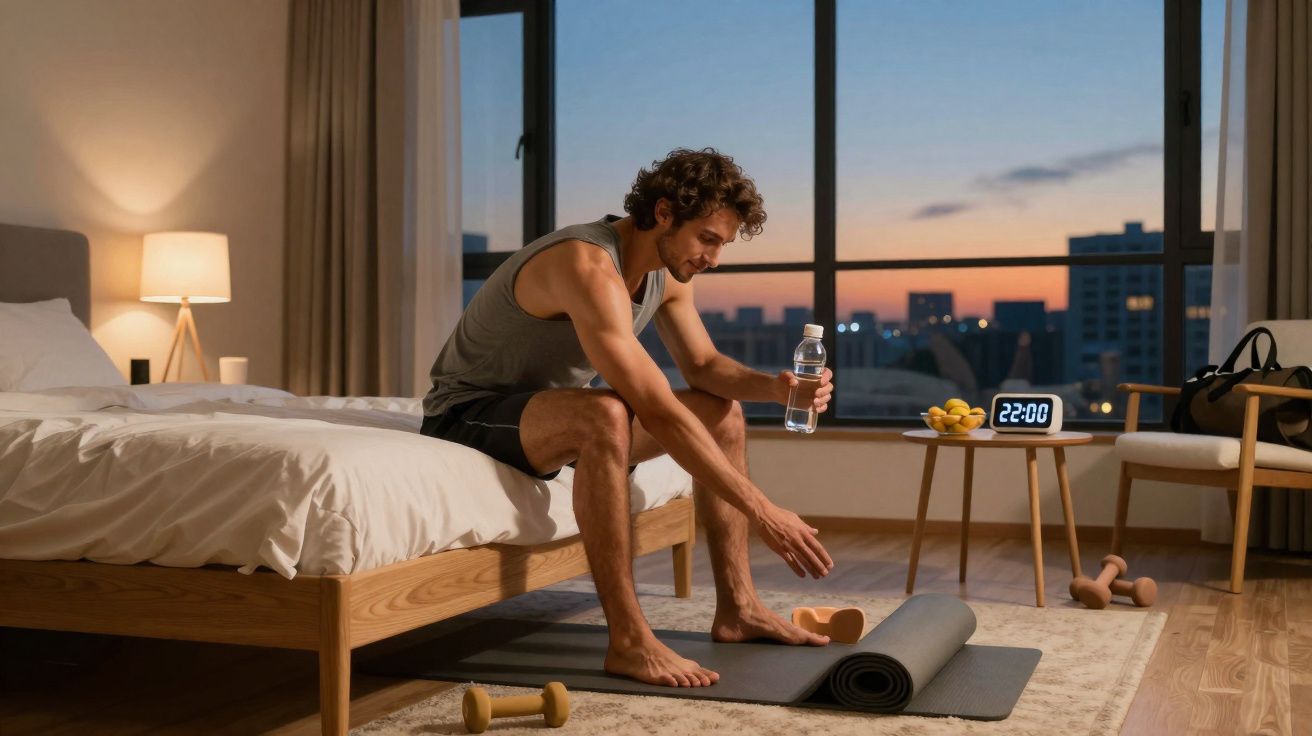
A lot of people worry that late workouts will wreck their sleep - and in many cases, that fear is misplaced.
If you spend the day sat at a desk, the evening is often the first real window you have to get moving. At the same time, a nagging question tends to follow: if I train at 20:00 or 21:00, will I end up so wired that I won’t be able to sleep at all? That anxiety is rooted in a stubborn myth. Research - along with what many coaches see in practice - paints a far more nuanced picture.
Evening exercise: the “sleep killer” myth
Why “exercise wakes you up” is only half the story
For a long time, the rule sounded simple: late-evening exercise should be avoided because it supposedly sends the body straight into an alarm state. But the human body does not work in such a one-size-fits-all way. People respond very differently to stimuli - and exercise is one of them.
One point is hard to ignore: hours of sitting, scrolling on your phone, and binge-watching right before bed often damage sleep more than a moderate bout of movement does. The familiar “blue-light blast” from laptops and smartphones suppresses melatonin release, lowering the sleep-hormone level - and that can noticeably delay falling asleep.
"If you just park yourself on the sofa in the evening, you often risk worse sleep than someone who still moves moderately."
By contrast, gently getting your circulation going in the early evening can help you close out the day more consciously, reduce stress, and in some cases even improve sleep. What matters is intensity, timing, and your personal body clock - not simply whether it’s “after 18:00”.
How evening exercise reduces stress and helps you switch off
Endorphins as a natural buffer between work and bed
After a packed day, stress can feel as if it has settled into your muscles and joints. Your mind keeps racing, to-do lists loop endlessly - and that mental noise is exactly what stops you from drifting off. A session in the evening can act like a psychological reset.
Movement boosts the release of endorphins and other messenger chemicals that support a sense of wellbeing. At the same time, it shifts attention away from rumination and towards the body: breathing, muscle sensation, rhythm. That creates a clear dividing line between the working day and the night.
A body that feels pleasantly tired and a mind that finally quietens down - that pairing is far more supportive of falling asleep than an evening of bottled-up tension combined with complete physical inactivity.
The real sleep thief: sessions that are too hard at the wrong time
Why going flat out at 21:00 throws your “body clock” off
This is where it gets tricky: if you smash out a brutal HIIT session, CrossFit, or hard interval runs late at night, you can push your system into high alert. Workouts like these activate the sympathetic nervous system - the programme responsible for “fight or flight”.
Your body releases more adrenaline and cortisol, heart rate and blood pressure rise, and alertness increases. That is the opposite of what you want shortly before bed. The knock-on effect is that melatonin release shifts later, and both falling asleep and staying asleep can become more difficult.
"A brutal workout right before sleep hits the body like a strong coffee: you do sleep, but often much later."
So, if evenings are the only time you can train intensely, it’s wise to be generous with your timing and follow a simple rule of thumb.
Moderate movement: the better deal later in the day
Many sleep specialists and sports doctors suggest keeping evening training in the gentle-to-moderate range. Good options include, for example:
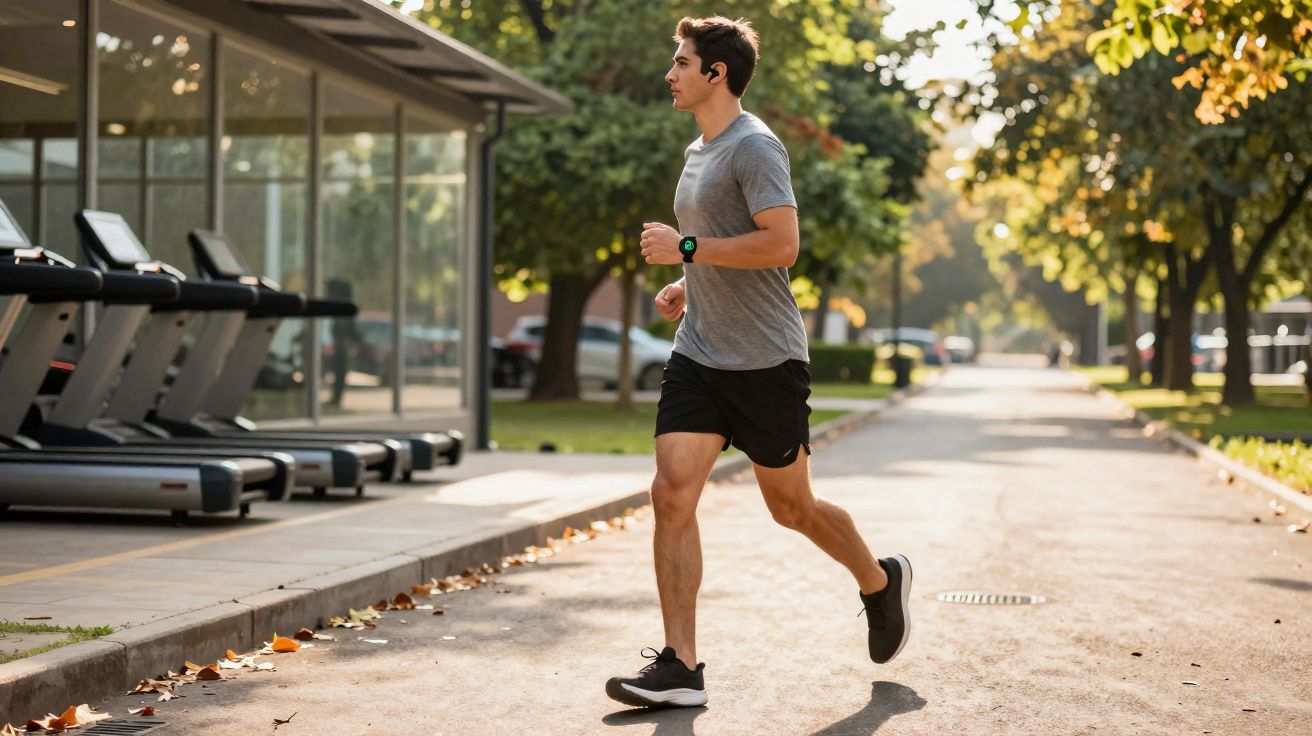
- brisk walking or an easy jog
- relaxed cycling
- calm lengths in the swimming pool
- yoga or Pilates
- stretching and mobility work
These sessions work your muscles and cardiovascular system without driving extreme spikes in heart rate. Breathing deepens, tension eases, and the body gradually shifts into recovery mode. The parasympathetic nervous system - the “relaxation side” - takes over.
Many people report that after 30 to 45 minutes of moderate evening exercise, they fall asleep faster and feel more refreshed the next morning.
Owl or lark? How your body clock really works
Chronotype: why not everyone should train at the same time
One key factor is often overlooked: not every body runs on the same schedule. Chronobiology broadly distinguishes between people who perform best in the morning and those who come alive later in the day.
If you naturally wake very early and hit your peak in the morning, you tend to get tired earlier in the evening. In that case, training at 21:00 often clashes with your internal rhythm. People with a later tendency, on the other hand, can feel surprisingly energetic after work and often tolerate late exercise well.
Working against your chronotype can easily trigger sleep problems. That applies to early risers who force themselves to train late, just as it applies to night owls who drag themselves out for a 06:00 run.
Listen to your body: take warning signs seriously
What counts is honest self-observation. If you notice after evening training that your heart rate stays elevated for a long time, your mind feels “stuck at full speed”, or you climb into bed still in competitive mode, take action: reduce intensity, move your session earlier, or switch to calmer disciplines.
A simple log can help. For a few days, note down:
| Date | Training time | Type & intensity | How it felt to fall asleep | Mood in the morning |
|---|---|---|---|---|
| Example | 20:15–21:00 | relaxed cycling | fell asleep quickly | fit, refreshed |
After a week, patterns usually emerge: which times suit you? Which activities wind you up too much? With that information, you can adjust your routine accordingly.
The temperature trap: when your body is too hot for bed
Why overheating slows down falling asleep
To transition smoothly into sleep, your core body temperature drops slightly. That temperature dip is part of the body’s natural “falling asleep” programme. Training does the reverse: working muscles generate heat, and body temperature can stay elevated for hours.
If you get into bed soon after a sweaty session, you may end up battling an uncomfortable sense of warmth. You toss and turn, pull the covers on and off - and your body is effectively signalling: “I’m not in rest mode yet.”
Showering properly: why lukewarm beats ice-cold
The instinctive idea - “I’ll take an ice-cold shower so I cool down faster” - often backfires. Cold shock constricts blood vessels near the skin’s surface. Heat then stays trapped deeper inside; you may feel briefly more awake, but not genuinely cooled.
"A lukewarm shower after training helps the body get rid of excess heat more effectively."
Lukewarm water widens the vessels, helping blood circulate closer to the skin. When you towel off and the remaining moisture evaporates, you lose heat - a natural cooling process. Combined with light clothing and a bedroom that isn’t too warm, this creates a much more sleep-friendly state.
The right gap between workout and pillow
The two-hour rule as a simple guide
Many experts recommend a practical guideline: aim for around two hours - ideally three - between finishing exercise and going to bed. During that time, heart rate, blood pressure, and hormone levels settle, and body temperature gradually drops.
A practical example: if you want to be asleep by 23:00, it’s best to have finished training by 20:00 or 21:00. In the buffer afterwards, light stretching, a lukewarm shower, calm music, or a short breathing exercise can fit well.
Eat lightly rather than overdo it - how food supports sleep
After exercise, your body wants energy and building blocks for recovery. A heavy, fatty evening meal can burden the stomach, keep body temperature higher, and contribute to restless nights. Going to bed with no food at all is not ideal either - low blood sugar can cause you to wake during the night.
Well-tolerated options include, for example:
- a plate of wholewheat pasta with some vegetables and chicken
- an omelette with vegetables and a slice of wholemeal bread
- quark or yoghurt with banana and oats
- a small portion of lentil stew with rice
Meals like these provide protein for muscles and tissue, complex carbohydrates to replenish energy stores, and often tryptophan - an amino acid your body uses to produce serotonin and later melatonin. A mild herbal tea (not too late in the evening) can round things off.
How to test your perfect evening setup
Small experiments, big impact
Rather than adopting rigid rules, it’s worth running your own trial. Over the course of a week, you can vary things on purpose:
- train moderately on some days and a bit harder on others
- bring your start time forward by 30–60 minutes
- try different disciplines - for instance, running one day and yoga another
At the same time, pay close attention to how you fall asleep and how you feel when you wake up. If you notice that yoga at 20:00 sends you off peacefully, but interval runs at 21:00 leave you staring at the ceiling, you’ve got clear guidance for future planning.
Related evening rituals that usefully complement exercise
Alongside movement, other building blocks can make sleep after late exercise more stable: brief journalling to clear your head, quiet music, breathing exercises, or a guided relaxation meditation. A fixed “screens off” time - for example, one hour before bed - also protects your body clock from additional disruption caused by bright light.
This is how, step by step, you can build a personal routine in which the evening is not a forbidden exercise zone, but a balanced mix of movement, recovery, and restorative sleep.

Comments
No comments yet. Be the first to comment!
Leave a Comment