
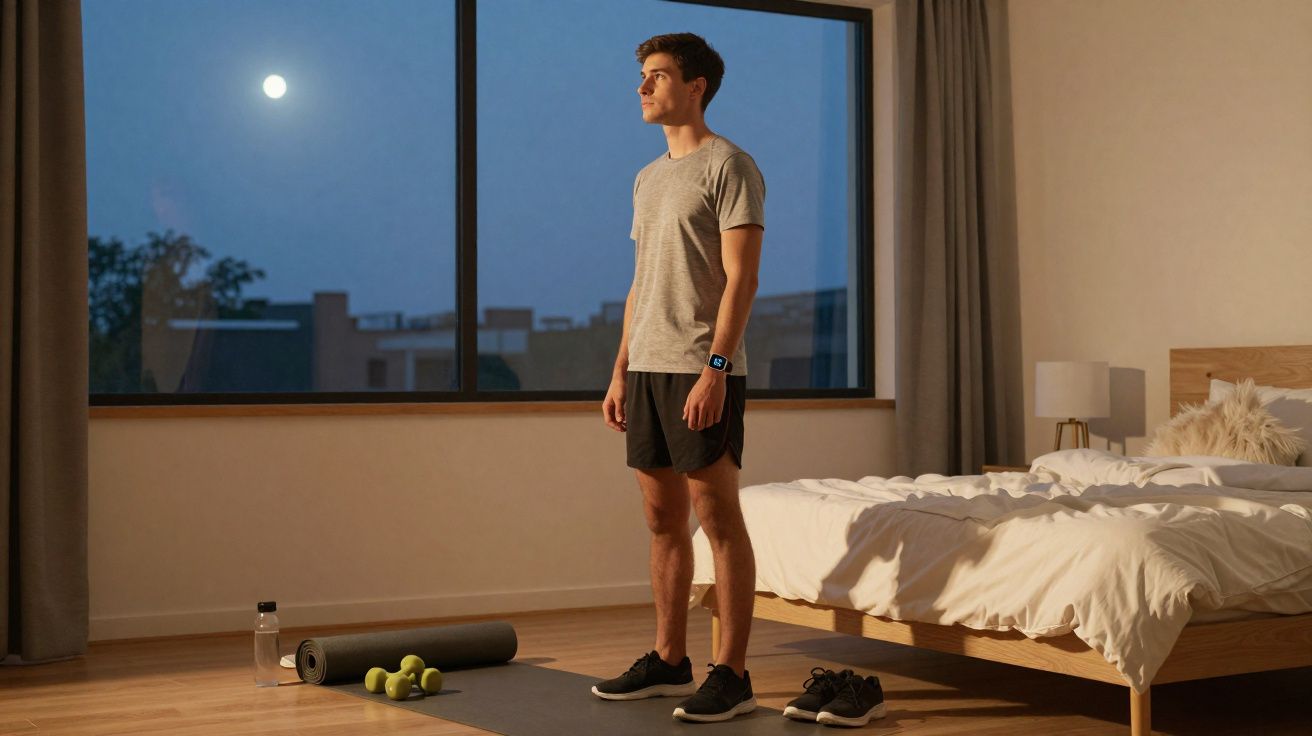
Work, family, commuting - and suddenly it’s 20:00.
For many people, exercise only fits in late in the evening. But how much does that really wreck your sleep?
Anyone who sprints from meeting to meeting all day and then, exhausted, checks the time at night knows the conflict: your body is begging for movement, your mind is begging for bed. In between sits the guilt - and the nagging question of whether a late run or a 21:00 workout will ruin the night, or might even do you some good.
Why the evening becomes the only exercise window for many
A tightly packed day pushes movement into the night
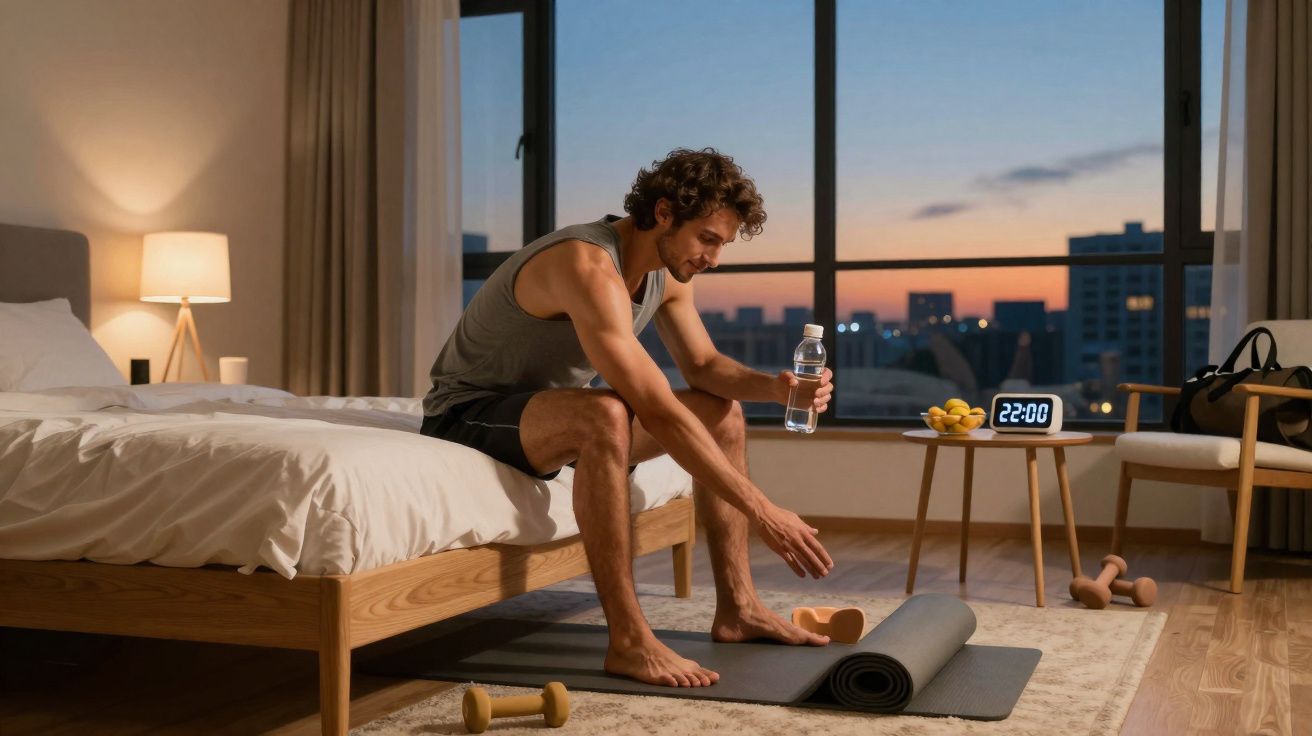
A lot of people now live to a rhythm dominated by pace and performance. The day is scheduled to the minute, and real breaks feel like a luxury. If you have to be in the office early, then sit in traffic afterwards, and later juggle children, housework or appointments, you often end up with just one realistic slot: somewhere between 20:00 and 22:00.
This is especially obvious in cities. Gyms are heaving in the evenings, and parks fill up after sunset - not because everyone’s a night owl, but because earlier in the day there simply isn’t space. That leaves a genuine dilemma: do nothing and slowly undermine your health, or train late and risk paying for it in sleep.
“For many, evening exercise isn’t a free choice - it’s an adjustment to an overstuffed life.”
The social norm has shifted. The “active day” no longer ends when you finish work. Emails, messaging and commitments drift later, so exercise gets pushed back as well. That can feel like relief - but it can also interfere with your natural sleep rhythm.
Sport as a release valve after a day spent sitting
After eight or nine hours at a desk, the tiredness is often mental rather than physical. Your head is buzzing, your neck is tight, and thoughts keep looping. This is where exercise works as a pressure-release valve. Movement draws a clear line between work and personal time: laptop closed, trainers on, step out of the mental noise.
Our bodies aren’t designed for hours of sitting. An evening session can help settle inner restlessness and create a more “pleasant” fatigue in muscles and joints. Many people notice their mind feels calmer afterwards, even if their heart rate was elevated shortly before.
“Evening movement can help you emotionally close the day - if the timing and intensity are right.”
The question remains: at what point does that release valve turn into a stimulant that pushes sleep later?
What happens in the body when we exercise late
The role of body temperature in falling asleep
People generally sleep better when core temperature drops slightly. That dip is one of the body’s key signals that it’s time to power down. Hard exercise does the opposite: it heats you up. Muscles generate warmth and blood circulates faster.
If that heat surge happens too late, it sends mixed messages to the brain: “stay active, don’t switch off.” Your body then needs longer to return to a sleep-friendly temperature. Depending on how intense the session was, cooling down can easily take two to three hours.
So if you do a brutally hard run at 21:00, it’s not surprising if by 23:00 your body still hasn’t reached “sleep mode”, even when your eyelids feel heavy.
A hormone mix between adrenaline and melatonin
Hormones matter too - and many exercise responses point towards wakefulness: adrenaline, noradrenaline and cortisol all increase alertness, reaction speed and readiness to perform. Useful during the day, much less helpful right before bed.
Alongside that is melatonin, the sleep hormone. It usually rises as it gets dark, telling the body to slow down. If you add intense effort just before that process, stress hormones can drown out the signals of sleepiness. The result is feeling wired on the inside, even though you’re tired.
“Late exercise can shift your internal rhythm - not because movement is bad, but because timing and intensity compete with sleep.”
Common consequences include trouble dropping off, lighter sleep, or waking up feeling battered the next morning despite spending enough hours in bed.
Intensity is the decider: when late exercise harms - and when it helps
Why all-out training in the evening can torpedo sleep
Very high-intensity sessions are a poor match for late-night timing. Typical examples include:
- HIIT workouts (high-intensity interval training)
- fast tempo runs or hard intervals when jogging
- cross-training with lots of sprints and jumps
- squash and similar fast racket sports
These sessions drive heart rate and breathing sharply upwards, put the body under significant stress, and extend the so-called afterburn effect: metabolism stays elevated and recovery remains in full swing for a long time. If you finish a HIIT session at 21:30, you’re rarely truly ready to sleep before 23:30.
There’s also the mental side. High intensity demands full focus and sometimes a competitive edge. Your brain doesn’t downshift instantly afterwards. This kind of training is often better placed early in the morning or at lunchtime - when the energising effect is actually welcome.
Gentler sessions can even support sleep
That said, a blanket warning against evening exercise would be wrong. A lot depends on pace and how your body responds. Moderate effort can even make sleep more stable. A useful guide is staying in a zone where you can still talk without gasping for air.
Common sleep-friendly options include:
- brisk walking or gentle power walking
- easy cycling without performance pressure
- relaxed lengths in the pool
- gentle yoga or stretching routines
These types of movement don’t overstress the cardiovascular system, yet they still get you active, ease tension, and lead to a comfortable tiredness. Temperature rises only slightly and drops again sooner.
“Moderate evening activity often creates the ideal mix of physical balance and sleep-promoting fatigue.”
Many people find they fall asleep more easily after an unhurried 30–45 minute walk or a pleasant cycle than on days when they barely move at all.
Your internal clock as the decisive factor
Chronotype: early birds tick differently from night owls
People respond very differently to late exertion. One person can run 10 kilometres at an easy pace at 20:00 and be asleep by 22:30; another lies awake for hours after half an hour of strength work.
A key influence is your individual chronotype. If you naturally wake early and feel sleepy quickly in the evening, you’re typically more sensitive to late activation. Classic night owls - who rarely sleep before midnight anyway - often cope better with a 21:00 session.
Rather than copying friends or fitness influencers, it helps to look inward: how do you genuinely feel after exercising at different times? What signals is your body giving you? Once a clear pattern appears, it’s worth taking seriously.
Finding your own sleep–exercise sweet spot with small tests
If you’re unsure, try a simple self-experiment. Over two to three weeks, note down:
| Day | Training time | Type & intensity | Time to fall asleep | How you feel in the morning |
|---|---|---|---|---|
| Example 1 | 19:00–19:45 | easy run | 20 minutes | refreshed |
| Example 2 | 21:00–21:30 | HIIT | 60 minutes | wiped out |
You’ll usually spot quite quickly which combinations of timing and intensity improve sleep - and which make it worse. If late sessions repeatedly lead to difficulty falling asleep, you can adjust: move training earlier, reduce intensity, or switch from hard intervals to steadier, gentler endurance work.
“Sometimes finishing training just 30 minutes earlier is enough to make the night noticeably more restful.”
Practical tips for evening exercise
How to make late training more sleep-friendly
If the evening is your only workable slot, a few levers can make a big difference:
- Finish training at least two to three hours before your planned bedtime.
- Limit hard sessions to once or twice a week and, where possible, schedule them earlier.
- Late at night, prioritise gentle endurance, stretching or mobility work.
- After training, deliberately downshift: take a lukewarm shower, dim the lights, reduce screen time.
- Avoid heavy, fatty meals straight after a late workout.
Small post-exercise rituals can help too: light stretching, a few deep breaths, perhaps a brief breathing exercise. This tells your nervous system that the effort is over and recovery is starting.
Risks and alternatives if sleep is already a problem
If you already struggle with falling asleep or staying asleep, it’s wise to watch late exercise particularly closely. In that situation, it can be worth moving activity consistently to the morning or early evening, and keeping the last two hours before bed as calm and low-stimulation as possible.
Instead of a hard session, suitable alternatives include:
- longer walks after dinner
- relaxation-focused yoga
- foam rolling or gentle mobility work
These activities won’t send your circulation into overdrive, but they can release tension and help prepare the body for rest.
In the end, the issue isn’t whether evening sport is inherently good or bad. What matters is intensity, the gap before bedtime, and your own internal clock. Keep those three factors in mind, and you can stay fit as an “evening exerciser” without spending night after night staring at the ceiling.


Comments
No comments yet. Be the first to comment!
Leave a Comment